The diagnosis of a family member as Autistic often unlocks a chain of insights. Here, we look at a question that frequently follows – “Could I be Autistic too?”
We do know that autism has a strong genetic component, with studies estimating approximately 76-87% heritability (Sandin et al., 2024). Although other factors also increase the odds that a child will be Autistic, genetic factors are generally considered to be the most impactful (Qiu et al., 2022).
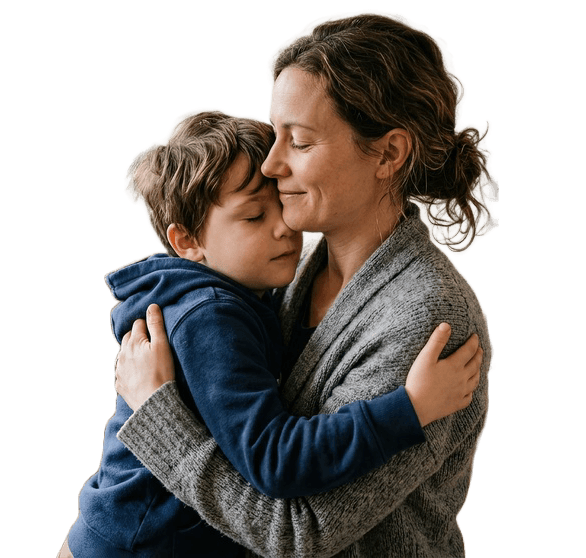 There is also evidence that autism is heritable at the trait level. Some researchers have used the term ‘broader autism phenotype’ to describe a set of traits and behaviours extending out from autism that are more prominent in the families of Autistic children than in control groups. This suggests that Autistic traits may be elevated in the family members of Autistic people as compared to other people, even if those family members are not diagnosed Autistic themselves (Rubinstein et al., 2019).
One large study showed, for example, that all Autistic traits are moderately heritable, with first-degree relatives of Autistic people showing elevated Autistic traits in multiple domains (Taylor et al., 2021). This is especially common in parents of Autistic children, affecting 36.9% of fathers and 26% of mothers (El-Bouhali-Abdellaoui et al., 2024).
These traits included:
- Restricted interests
- Reduced social responsiveness
- Challenges with social communication
- High social anxiety
- Some aspects of information processing/reaction time
 If you have several family members who are Autistic, you might find that you have elevated Autistic traits without meeting the threshold for a diagnosis. You might experience some of these tendencies, for example, but have found workarounds or ways to set up your life that meet your needs. You may then experience some of the characteristics of autism without the accompanying distress or social exclusion that Autistic people often experience. The label of being Autistic might not be needed for you to understand yourself or might just explain parts of your experience. This is a valid and common situation.
Having elevated Autistic traits yourself could also mean that you are more used to/familiar with Autistic traits and patterns of relating, and don’t necessarily notice Autistic people as ‘different’. This is common in parents of Autistic children and can mean that parents with more Autistic traits see their children as typical. Many remember acting the same way themselves as children.
Autism as a label
Although many Autistic adults report feeling a sense of relief when they receive a diagnosis and/or identify as Autistic, this doesn’t apply to everyone. Many Autistic adults have mixed feelings about labelling themselves as Autistic, and some worry that the diagnostic label should be reserved for people with more significant disabilities or hardships than they themselves experience. This is more common amongst older people (Huang et al., 2020), which might have something to do with historical attitudes around autism and disability more generally.
Until about 2010, it was common to think of autism in terms of young boys fixated on trains, for example, or to hear autism used to refer to people with learning disabilities generally. The label is also still often reserved for people who come across as awkward, or for people with unusual, quirky behavioural patterns.
While stigma still exists, many of today’s parents and grandparents also grew up in a time where it was much more marked and widespread. This can shape some of our feelings around labels and diagnosis (Turnock et al., 2022).
 If you have lived many years without realising that you are Autistic, it can be hard to think of yourself in terms of autism. Understanding autism may provide the answer to questions you have had all your life and open a new language to describe your experiences and a new sense of identity. Alternatively, it might require you to identify habits that you have developed to hide or mask autism, and you may struggle to see autism through many years and layers of adapting and coping.
Some resources about masking: Please don’t ask me to be brave, Five times masking, What is autistic masking?
Exploring Autism as an Adult
You might like to:
Learn about Autistic Traits
A diagnosis of autism is typically made when a person has displayed the following characteristics since early childhood:
- Differences in social communication and social interaction; and
- Restricted, repetitive patterns of behaviour, interests or activities—this includes sensory sensitivities.
Differences in social communication and social interaction refer to the way people behave in social situations. There are a lot of ways that these differences can manifest, but some common ones include:
- Being less likely to initiate and sustain interactions with other people
- Being less likely to respond when other people try to interact with them
- Feeling tired or anxious in social situations
- Difficulty with the back-and-forth of conversations
- Reduced eye contact in social situations
- Differences in the way they share thoughts, feelings, interests etc. with other people
- Struggling to understand non-verbal communication like gestures, facial expressions, and body language
- Difficulty with friendships and relationships
- communication differences
Restricted, repetitive patterns of behaviour, interests, or activities refer to a long list of characteristics that you may relate to. The following are examples of restricted, repetitive patterns:
- Repetitive movements, known as stims (such as bouncing your knee, tapping a pen, flapping your hands, and rocking back and forth)
- Lining up/organizing/categorizing objects
- Sticking to a routine and following rules precisely
- Struggling with unpredictability and change
- Strong and intense interests in a particular topic. Autistic people often have strong, intense interests in particular topics or activities. They might like to gather a lot of information and facts about these, talk about them a lot, and spend a lot of time on them. These are sometimes called special interests.
- Sensory sensitivities: Autistic people often have differences in the way they perceive and sense the environment around them. They might be hypersensitive to some things (like sound in general, or a specific sound) or hyposensitive to other things (e.g., not being aware of our surroundings).
You can experience just a few of these, or all of them.
Take an online screening test
You may also want to take an online screening test, or several. This can be a helpful way to collect and record your thoughts and experiences and see which Autistic traits resonate with you. Online tests can vary widely, so it’s important to choose tests that have been researched and validated by a professional. Some good ones to try: Autism Spectrum Quotient (AQ), The Ritvo Autism Asperger Diagnostic Scale–Revised (RAADS-R)
It can be a fun exercise to have someone who knows you well also complete the test on your behalf and compare your answers.
Finally, here are a couple of YouTube presentations on Autistic identity that you might enjoy: Pros and Cons of being your Authentic Autistic Self, Kristy Forbes on Identity, Quincy Hansen on Identity
REFERENCES
El‐Bouhali‐Abdellaoui, F., Voltas, N., Morales‐Hidalgo, P., & Canals, J. (2025). Examining the Relationship Between Parental Broader Autism Phenotype Traits, Offspring Autism, and Parental Mental Health. Autism research, 18(2), 387-401.
Huang, Yunhe & Arnold, Samuel & Foley, K-R & Trollor, Julian. (2020). Diagnosis of autism in adulthood: A scoping review. Autism, 24. 136236132090312. 10.1177/1362361320903128.
Qiu, S., Qiu, Y., Li, Y., & Cong, X. (2022). Genetics of autism spectrum disorder: an umbrella review of systematic reviews and meta-analyses. Translational Psychiatry, 12(1), 249.
Rubenstein, E., & Chawla, D. (2018). Broader autism phenotype in parents of children with autism: A systematic review of percentage estimates. Journal of child and family studies, 27(6), 1705-1720.
Sandin, S., Yip H. K. B., Yin, W., et al (2024). Examining sex differences in autism inheritability. JAMA Psychiatry Vol. 81, No. 7.
Taylor, S. C., Steeman, S., Gehringer, B. N., Dow, H. C et al. (2021). Heritability of quantitative autism spectrum traits in adults: A family-based study. Autism research: official journal of the International Society for Autism Research, 14(8), 1543–1553. https://doi.org/10.1002/aur.2571
Turnock, A., Langley, K., & Jones, C. R. (2022). Understanding stigma in autism: A narrative review and theoretical model. Autism in Adulthood, 4(1), 76-91.