Lorna is committed to working directly with people, families and communities to develop approaches that support the needs of disabled people and reduce life-long dependency on systems that do not.
While her advocacy for disabled people’s rights to self-determination and integration in society has had worldwide impact, closer to home, it includes instrumental roles in developing New Zealand’s Individualised Funding scheme and the Enabling Good Lives initiative, and the development of the National Disability Insurance Scheme in Australia.
In this interview to mark 20 years of Altogether Autism, Lorna talks about the current state of support for disabled individuals and their families in NZ. She discusses how the Enabling Good Lives (EGL) framework offered transformative potential, yet its principles have been eroded in favour of deficit-based, corporate provider models. She highlights how families remain central voices for those who are marginalised and cautions that stripping back their authority could create a path back to institutionalisation.
Lorna advocates for a return to EGL processes, to empowering families with financial autonomy, and professionalising support roles that centre empathy and community connection, rather than administrative management.
Tell us about your involvement in the disability sector and your view on where we sit now?
I have been involved in the disabled community and the disability sector now for about 50 years and, of course, I’ve seen considerable change over that time. Some of that change has been progressive, but sometimes you take a few steps forward and several steps back.
My involvement in the disabled world has been on many levels: I have a disability myself; I was part of DPA (Disabled Persons Assembly) for a long time then vice chair of DPA; and I’ve worked in a range of roles within the system, from support work through to chief executive, policy development and advocacy. Through this, I think I have gained a sense of where we have been over the past 50 years or so, of where we are now and what the future might look like.
I founded ImagineBetter because of enormous gaps in the sector, which continue, particularly around engaging with families early and supporting families to understand the potential of their sons and daughters’ lives – what the vision of a good life would look like, and how you might pursue that.
We need to give families a sense of hope, to believe in the ability of the family to invest in the lives of their family member, and really ask the question, what would be most helpful to enable this family to flourish? That’s what Altogether Autism also looked to create – an environment where Autistic people, their families and support networks are understood.
When you lose that vision, families only know what they know and only ask for what already exists, because there’s no investment being made in what would work best for them. For example, they might ask for residential services and for respite care because they know they’re the only things they’re going to get, even though that doesn’t meet their needs. Then the ministry says, “You see, people want these things.” Well, no, it’s the only thing being offered, and out of desperation they simply take that option. This, to me, is quite tragic. Largely because we had the potential with Enabling Good Lives to really rethink, in an authentic way, “What does support to a disabled person and their family mean, and at what point?”
One of the principles of Enabling Good Lives is investing early, beginning early; not waiting until the whole thing has tipped over the cliff and then thinking, oh well, we’ll give you this bad option because it’s the only one we’ve got. That’s where we’re sitting now.
EGL is obviously a key part of the progress over the last 20 years. The potential of Enabling Good Lives starts with building families’ understanding that money isn’t necessarily the solution to everything. Money doesn’t buy a lot of the good things in life. It doesn’t buy roles. It doesn’t buy relationships. It doesn’t buy contribution, participation.
Having created an EGL platform from which that capacity could emerge, it has basically been stripped away and they say, “We’ve got EGL because we say we have,” not because any of the principles are applied. For example, if you take the principle of ordinary life outcomes, you cannot achieve ordinary life outcomes when you are segregated from adequate education, when you are marginalised from your peers, when you are placed into a group home where you have no authority over where you live, who you live with, who comes in and out of your home, etc. There’s nothing ordinary about that.
We need to get back to understanding people and what might be the best use of the resource available. An example from Palmerston North: A mum who couldn’t get a break, couldn’t get respite because her son challenged people and she couldn’t find a support worker. When she got Individualised Funding and a personal budget (at no more than what she was getting before), she said, “You know how I get my respite now? Twice a week I go, in the middle of the day, when it’s mostly empty, to McDonald’s, as they’ve got a big playground. I put my kid in the playground and shut the gate because I know he’s safe and he can yell and scream, jump around, carry on, enjoy himself, and I can get myself a coffee and a magazine and it costs me, I don’t know, six bucks a week, and I can plan that break and get that break.”
Well, that’s cut off now. “You can’t use government money to buy a cup of coffee.” Now you must have a support person, you have to pay someone, so she can’t get anyone again. And this is what we’ve sunk to. We think we know better about what’s going to meet someone’s needs than the person themselves.
If you look at the resource now, you might say 30 to 40% of it is wasted. It doesn’t deliver what people need. It goes to propping up large corporate providers. They benefit, not the people in receipt of the service. Then people lose skills, lose relationships, lose roles. It’s just a series of loss until you get to the lowest common denominator – the disabled person’s role in life is a client, and the client sustains the system. It’s perverse and can only be reversed, I believe, by families.
Altogether Autism has supported families to appreciate that autism is just one component of the life of a person. It doesn’t have to define their life; we just need to factor it into our thinking about how we support the person to be the best that they can be.
To the extent that they have been able to, particularly given the current situation, they’ve been doing a great job at that. However, when there are so few support options available to families, other than your standard group home or supported living, this work can’t bear fruit.
It’s not because there wasn’t the potential for it to bear fruit. It was just that the ground wasn’t fertilised or nourished, and here we are. The leadership for change will not come from the provider sector. That’s not vilifying the providers. That’s saying providers have their business model that works for them. The fact that there are no good outcomes in the lives of people, that people don’t grow, flourish, develop – say, in their group home – that doesn’t seem to count. So, why would a service provider disrupt their model?
The only place where this leadership will come from is from families who refuse to accept this is as good as it gets. But if families get browbeaten from day one by every negative – that this child is going to be a burden – it can be disastrous. Where do they then get the vision that says, “Hang on, this kid has the same potential as every other kid to live a full, meaningful, and inclusive life. We just have to figure out how we get them onto that path that works for them.” It is no easy feat. When the system rejects at every step, how much rejection and hurt can a family take and retain hope?
Because even though we say we have a needs assessment system, that system does not assess need. It assesses deficit: we find out all about who the person is not, what they’ll never be, what their ‘dysfunction’ is, and we think by providing services, that’s going to resolve the issue. But we haven’t addressed any of the fundamental questions of who is this person, what are their gifts, what are their talents, what are their aspirations in life, what are their fundamental human needs, which often outstrip their disability specific needs. Of course, if you don’t address those needs, they become greater and more urgent, and consequently the person requires more support. Then the government says, “Oh, we’re spending too much money.” Well, hello?
On top of that, what we are seeing right now is families being vilified, marginalised. Don’t you dare challenge us. But the only way you’ve got strong, assertive disabled people is because they have strong, assertive families who have nurtured that. Now, not all families are perfect, but who’s going to be there for the long term? Who’s going to be there through hell and high water? It’s families.
It’s not the system. It’s not the money. It’s not the ministry. And yet, there’s almost a sense of once a person has a service provider, they are now owned by that provider. They are not owned by a provider. They are part of a natural support network, which is driven out.
Could you share your experience of Autistic culture, and the neurodiversity movement over the past two decades?
The last 20 years are hugely important to autism because, really, prior to that, autism was mostly either denied or misjudged.
Generally, we understand better that neurodiversity exists and what that might look like for people, which is progress. But if you don’t take any action on it, then it becomes a wasted exercise.
I think what has also happened is Autistic people who never develop spoken language and those who have an intellectual disability are less visible now, because of the increasing number of Autistic people in the system without intellectual disability or delays in speech and language development (but who do struggle with social interaction and making sense of the world). They are much more numerous. It’s not to say that we should not consider that they have support needs and what those might be to help sustain them. But if you look at Autistic people facing significant barriers in communication, regulation and cognition – unless families have a voice, this group of people are the easiest to marginalise.
If the family voice is driven out, the only people who get a voice are the providers who make their own assumptions about the person and can cause incredible harm because they actually don’t know what the family has scaffolded around them, for 20-25 years or more, to make life sustainable. They say, “This medication is what’s available and we’ll put you on it when you get angry and distressed.” Not, “Hang on, have we completely understood this person?”
Looking to the future, what do you think is most important for the next 20 years?
To bring back into focus what the authentic framework for Enabling Good Lives is about: that we start with the person and their family, and we build out from there. And we give as much authority, input, support, and encouragement to families that we can. Alongside of that, some things will cost money, and we need to think about what is the best use of that money? Throwing money at the situation won’t resolve it because it doesn’t solve their needs.
The other thing that we need to understand is the role of support organisations like Altogether Autism and their staff. These are highly skilled, overlooked roles. They shouldn’t be the lowest paid people. We need to really understand what roles are required within the sector, and how you upskill and retain real professionals. I’m not saying they must be social workers, psychologists. I don’t believe that at all.
Organisations like Altogether Autism and Parent to Parent are sought out because they have staff with deep empathy for others and great communication skills – people who are embedded in community and know how to build community, how to bridge relationships, and to hold and promote a vision of what’s possible. We need to build on these socially valued roles; then we build trust.
Trust is huge, especially now, as trust has been lost. Trust is the easiest thing to lose and the hardest thing to gain. Who are the most trustworthy people around the person with autism? It is their family, and their whanau, and their wider support network. People who care about the person, and care about the carers.
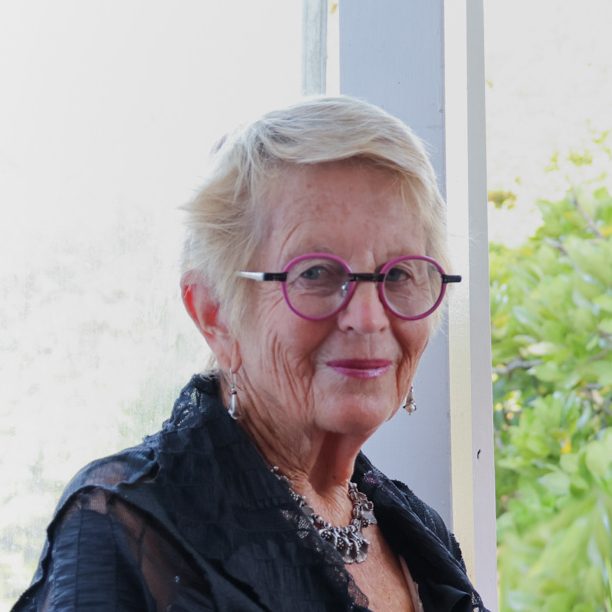 Lorna is an Officer of the New Zealand Order of Merit and a Life Member of Parent to Parent.