Could you introduce yourself and tell us a little about yourself?
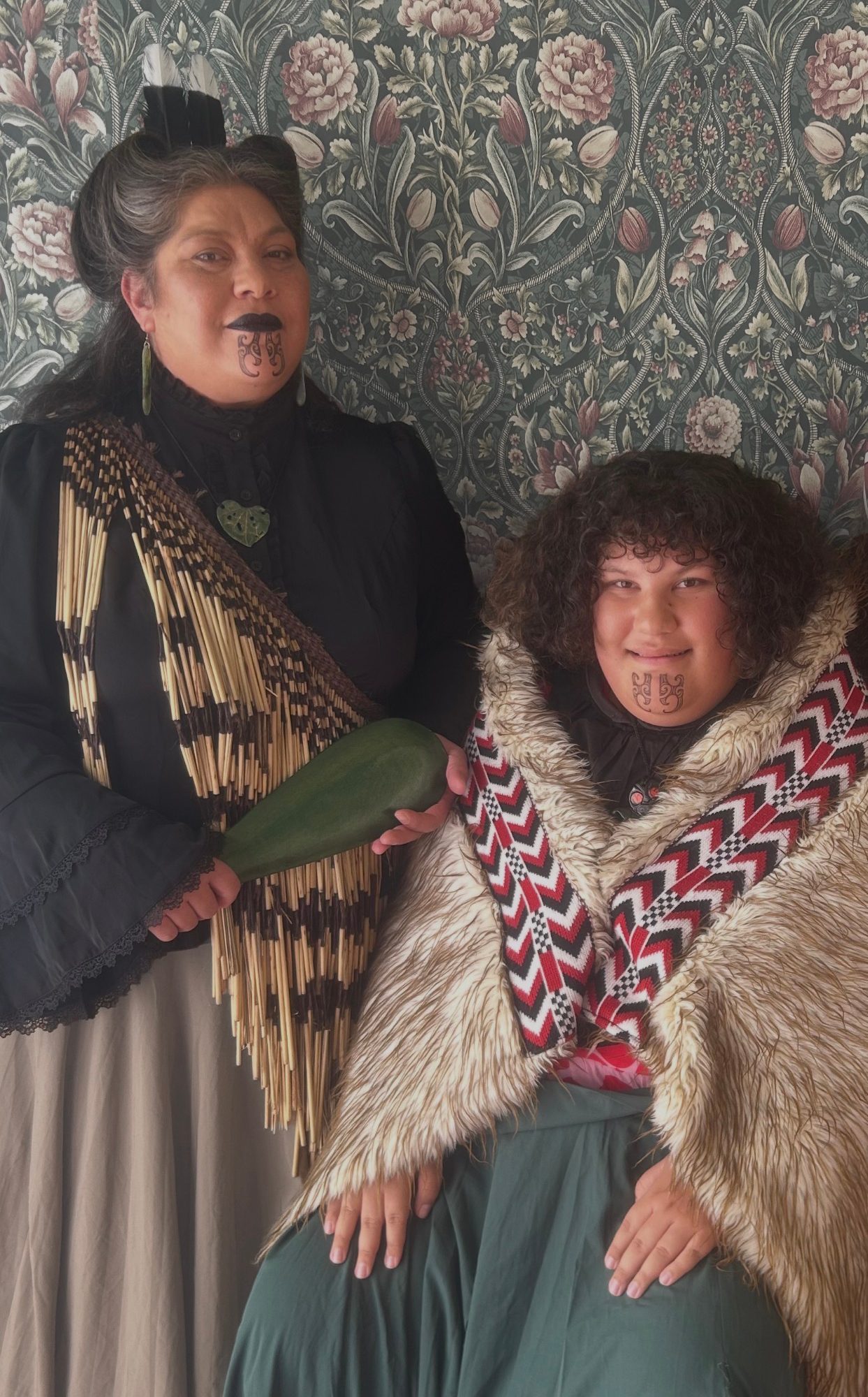
Kiora, ko Hikurangi te maunga, ko Waiapu te awa, ko Nati Paro te iwi, ko Rebekah Corlett tōku ingoa. My name is Rebecca Corlett. I’m a parent of an Autistic teenager, and I identify as neurodivergent myself, which I have discovered through my 18-year journey as proud mama to my daughter. I live in Ramati Beach on the Kapiti coast, and was born and raised in Te Awa Kairangi ki Tai, Lower Hutt.
Tell us about your diagnostic journey
My daughter was diagnosed when she was two and a half. She had no verbal communication skills at that early age, and she wasn’t hitting the same milestones as others the same age. She wasn’t really interested in the world around her; she enjoyed keeping to herself. We tried different strategies, which I regret now, like taking things away from her to get her to explore a bit more. I don’t really think that was a very good idea, but we were listening to other people’s strategies quite heavily at that at that point.
When we thought we couldn’t hold off any longer – although people were saying that it was probably hearing related or just, all children are different – I followed my gut and decided to go for a private diagnosis.
 It was easy at that time, in 2011. We sought out a provider, they were based in a nunnery, The Home of Compassion, in Island Bay in Wellington, and the wait time was probably about six weeks. I remember when we went there, the specialist was flying in from Nelson. He did maybe one clinic a week, and we’d driven all the way from Kapiti into Wellington, out to Island Bay, and then found out there’d been fog, and he wasn’t able to land, so we had to go all the way back, and return in a week or two weeks. I guess that that was our difficult journey, but hardly, comparatively. At least there was somebody there, an option for us to be seen with very little wait. Whereas now, I think you’d be very hard pressed to find anybody in Wellington who can do those assessments.
For us, it was quite a clear-cut process. I believe the diagnosis cost under $500. A minimal amount, which I look back as being our privilege. Something I know is so out of reach for so many families now, was available to us just by pure luck. We won the postcode lottery because there was that option, we’re very thankful for that.
I’ve been driven over the years to advocate for that same access for others, because that’s not the experience of so many families. It shouldn’t be hard to get an initial diagnosis – which is the start line in initiating a chain reaction of support and education for the whole family.
What has been your experience of supports, information, and clinicians that you’ve been involved with?
Through Child Development Services we were able to access early intervention – to physio and occupational therapists who supported her through the early childhood years and set us up for starting school. I look back on those as the golden days where everything was quite plentiful. The support was really robust.
The workforce wasn’t great at that stage, mind you. We had a teacher aide assigned for a good period, but it seemed as if every six weeks the person would change. That’s something I struggled with because you’re starting from square one with each new person, all the momentum you’ve built is lost. They think your child is learning new things, but it’s actually skills they have already learnt. So, there was a lot of repetition. She was about three or four when the first communication supports were introduced, and a lot of time was spent on just building a rapport between my daughter and each new staff member. It takes time to build up that trust before you can start building the communication skills.
We applied for ORS funding before she started school, and that gave us choice as to where she would go. Our first option was the local primary school where my husband went, but they said, “Oh no, you don’t want us. You want the specialist school, the satellite class next door.” We thought that was helpful. We weren’t quite aware of it being discrimination at that stage. I thought, “Oh, thank you for the tip,” and so that’s where we ended up going.
She was in a satellite classroom throughout her primary school years. Then she transitioned to a mainstream college, which was another journey. But she was ready to take on that challenge – socially and communication-wise – and it’s been successful.
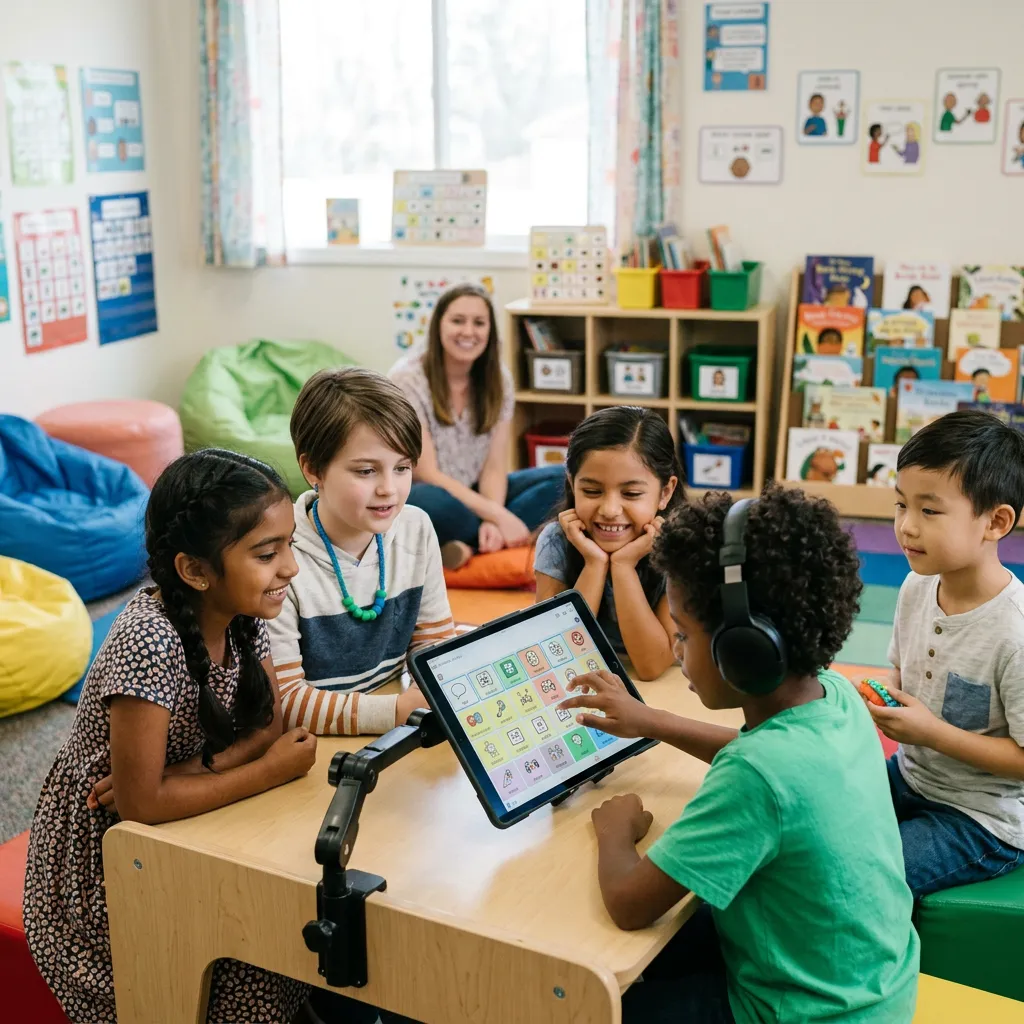 Clinician-wise, I’d like to mention our journey with assistive technology. The specialist school had a great process in applying for assistive technology, with a speech therapy team that knew how to do all the paperwork. They also had continuity of staff working with my daughter, so they were able to build up skills in preparation for trialling an AAC device. It’s probably had the biggest impact on my daughter’s development, and on our journey moving forward through school. Through access to assistive technology, she found her voice and her ability to make decisions and speak up for herself, which I’m really thankful for. It’s also guided my advocacy, because I see the many families who aren’t able to access such supports, who miss out on their huge, positive impact in building a young person’s identity: their ability to communicate and advocate for themselves.
As an advocate, a parent, and an Autistic Advisor, what have you observed, and what has changed for you over time?
I think what’s changed for me over the years is that there is a definite shift towards speaking directly to Autistic people, and that’s something I’ve always admired about Altogether Autism. They value the voice of Autistic people as the experts on autism. In my early years as a parent, it was drummed into me: you are your daughter’s best advocate. You’re their voice. You need to speak up for them… which of course you do when they are young.
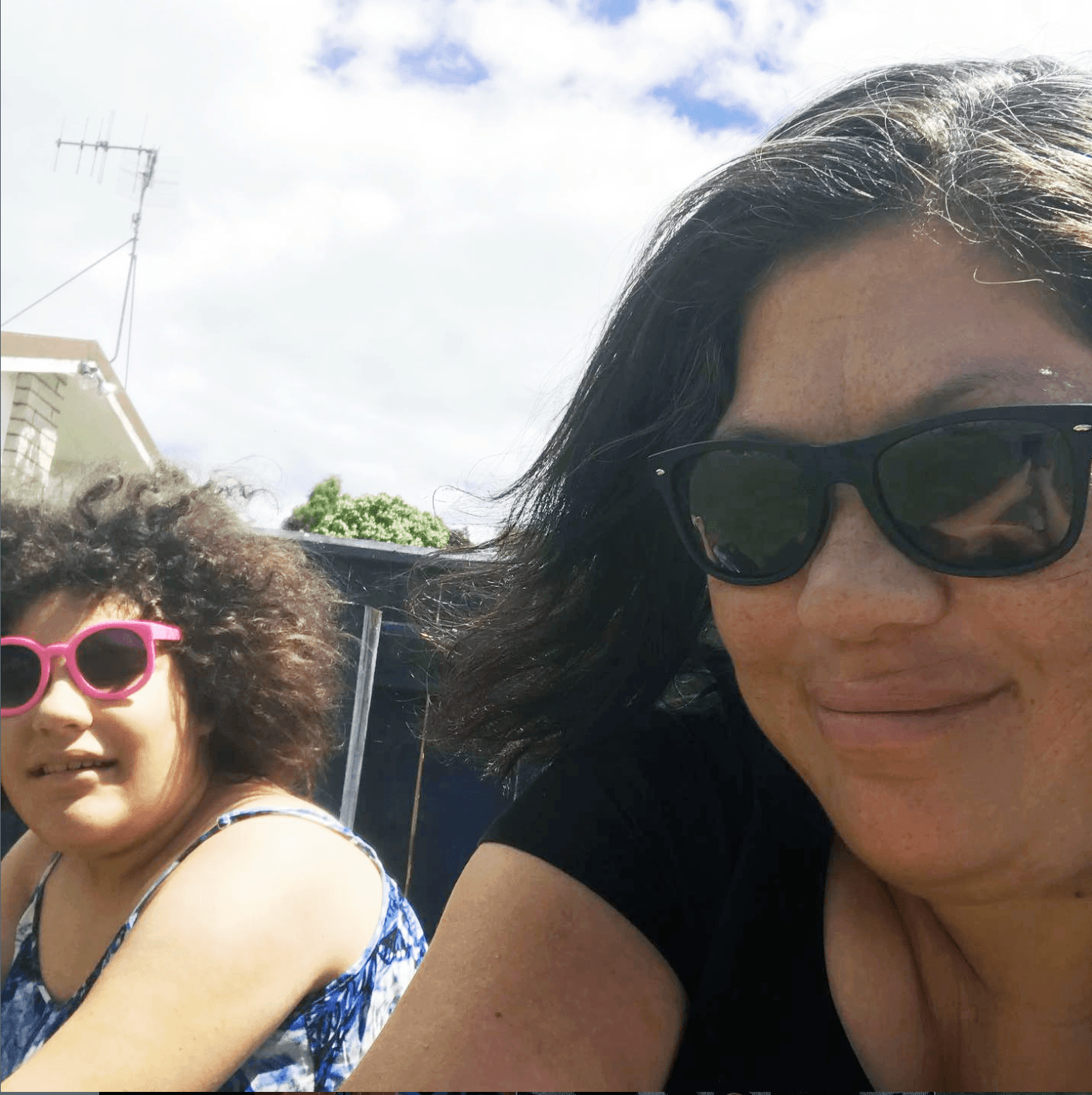 My experience through Altogether Autism has taught me that as they grow up, there are better voices. In fact, if we allow for time and space, my daughter can actually advocate for herself, and that’s something I’ve learned from spending time with the Autistic Advisors at Altogether Autism – amazing people who are doing incredible things in their own lives and their communities. We don’t need to speak on behalf of them. They have the answers, the solutions, all the best ideas come from them directly, and we just need to shift that perception that we know best. We’re there to amplify their voices, not to speak over them. That’s something I’ve always really been passionate about.
There’s a time and a place where you do need to speak up for your child, but just know that that’s a temporary situation, and we can all do more to support and encourage them to advocate for their own needs in a way that’s meaningful for them. That’s where the value, the treasure lies. We should always be aspirational, no matter where your child is on the autism spectrum, and plan for a future in which you know they can advocate for themselves.
When did you first become aware of Altogether Autism?
 My journey with Altogether Autism started back in 2017 when there was a conference in Auckland, and there was a certain number of free passes for parents and Autistic people to go along, and I was one of the lucky people chosen to attend. A lot of the parents and Autistic people that I met there, I’ve kept in touch with over the years, and there’s a few of us who check in with each other daily. Those connections are really important to me, and I’m really thankful that Altogether Autism enabled them to happen.
There’ve been lots of positive opportunities through the organisation that have kept me connected. Altogether Autism has been very influential on me as a person and as a parent because it’s given me the opportunity to connect with Autistic people who are older than my daughter. I was just blown away with the impact they were having in their communities. Just seeing the incredible things they’re doing around the country was a snapshot of what life could be like, the things she could be achieving in her own life. There’s such a power in seeing what somebody else has achieved and what’s possible. Because we think we know what autism is, but really, until you see it through someone else’s eyes, you don’t. You don’t know what heights, what levels you can succeed at. So, it’s been helpful for me as a parent to be able to see life in the future through other people’s perspectives.
As parents, we quite often get stuck in that echo chamber where everyone’s telling you those same things, “Oh, you’re the best advocate. You’re their voice, you know. Oh, you’re so great. I don’t know how you do it.” All those things. You start believing it, and when you live within those confines, you’re not really looking out at what life could be like for your child. It’s only when you interact with Autistic people who are absolutely smashing it that you realise that there is more out there. It’s scary sometimes, but it’s good for you to look outside of your little echo chamber of opinions.
What are your reflections on how understanding has changed, supports, and the language you have available to discuss your lives and experiences?
General awareness has increased but the barriers still exist. Awareness of what autism is has increased. People are also more comfortable with the word. It used to be whispered a lot more, when my daughter was younger, whereas people will just talk about it openly now – it’s not so scary – because they have more points of reference.
 There are other words people have become more are comfortable with such as neurodiversity and neurodivergent. They may not be used 100% correctly all the time, but it’s a starting point for a conversation, and for learning more. The term takiwātanga is being used more, and people celebrate it and identify with the meaning – with it being a step away from a clinical diagnosis to a way of living. ‘In their own time and space’ is a description that was needed because it reduces the fear behind a clinical diagnosis of autism. Now, we’re seeing autism more within a natural spectrum of the way we think.
Unfortunately, I don’t think supports have improved – the barriers and attitudes within health and education haven’t improved at the same rate. So, people are still fighting the same attitudes and facing the same barriers. I see less investment in inclusion. Inclusive education doesn’t seem to be at the forefront anymore, and all the talk around choice is around having the choice to enrol your child in a segregated, specialist school environment.
That’s nothing against specialist schools, because they do an amazing job, it’s just people are being presented with less choice, but it is being framed as more choice. The language around the shift from inclusive to separate, that’s interesting to me. It isn’t authentic. With the cost of living and diagnosis being so much harder to access, people generally have less choice. So, when something is framed as a choice, of course they are more open to it.
Could you share your experience of Autistic culture and the neurodiversity movement?
I think neurodiversity is the first touch point for a lot of people who may not have had any interaction or experience with autism; it’s a user-friendly term that enables people to start their learning journey. The fact that neurodiversity covers so many different conditions is great too, because it speaks to the natural variance in the way that people think. It’s not a deficit-based concept, but a strength-based, respectful concept. It enables people to expand their understanding of the autistic mind – that it’s not just one profile. It’s part of that movement towards more acceptance – that a diagnosis like autism is not wrong or necessarily a disability or an inability to do things. It’s purely a term that describes how people interact with the world. It was needed, and it does change the way that people think about and support Autistic people, because it’s inclusive of lots of different strengths and challenges they might have.
Looking back, what have you learned that changed everything or had a massive impact on you?
 I think there’s two things that had a massive impact on me. The first one was a particular conversation with an Autistic person at the Altogether Autism conference in 2017. Up to that point, the way I talked about my daughter’s autism, and the fact that she was non-speaking, was, “She doesn’t talk, but she will one day.” I think that’s because people had instilled that in me that the goal is for her to be talking. I thought I was being helpful and respectful by saying she doesn’t yet, but she will. This person at that conference said, “But she might not. She might never talk in the way that you want her to, and that’s okay.”
That was a real light-bulb moment for me. Yeah, that might not happen. People had been projecting their own wishes, I guess, to cure or fix what was ‘wrong’ with my daughter, and I’d been taking those on board. Whereas it was never an issue for us. I knew as a parent that my daughter communicated with me, and I understood her, and we didn’t need spoken words. There are other tools and strategies that could be just as successful as speaking. But to hear someone else say that it was okay, that we don’t have to chase what other people think is normal, was very reassuring. My daughter is perfect the way she is, and she does communicate. She will build on those skills and communicate in a way that is best suited for her, and it might look different to a lot of other people.
Similarly, I think the biggest lesson I’ve had as a parent (and I like to share this with other parents) is the day that you stop caring about what other people think about your parenting skills or style or how your child is behaving in public, or how they move, or any of that stuff. The day you stop giving a damn about what other people think is the day that you set yourself free. You’re allowing yourself to just be a parent and enjoy your child as the unique individual they are.
We should just be kind to ourselves and allow our children to be who they were born to be and celebrate that. When you can celebrate the things that make your child different, rather than hide them or shush people who mention them, that’s the day that you start again, for the better.
Is there anything that has got harder?
I think what got harder was maintaining relationships, friendships; trying to keep up with invitations to places or family gatherings. There was just a point where we thought, right, this doesn’t work for my daughter. Especially around Christmas time, which is all about children and their experience: the crowds around Santa in the mall, queuing to sit on Santa’s lap and all that, it’s not for us. Sometimes it worked, and we didn’t rule it out. But we didn’t feel the need follow the expected social norms.
Even this year, there was the school ball, and the supports were there to make it a possibility for her. But through talking to her about it, we knew it wasn’t something that was of great interest. We’re more comfortable with turning down invites now. That’s not always a great thing, you lose that social interaction, and so we do isolate ourselves a bit. But, in the grand scheme of things, that’s the way it is, and we can find connection in ways that aren’t going to be sensory minefields for my daughter.
It comes back to setting yourself free – that you don’t have to live up to people’s expectations, you set your own boundaries. We can be guided by what she wants, rather than what’s considered age appropriate and expected of her. I follow her lead now. I don’t have to make the big decisions. She turns 18 next week.
What are your priorities, aspirations? What do you think is most important for the next 20 years?
I think we need to continue build on that increased awareness and creating an accessible, inclusive framework that benefits Autistic and neurodivergent people. I’d love to see a shift back to inclusive education, so that families do have actual choice as to where their child goes to school. You shouldn’t have to choose a specialist or a separate education setting to get the right supports. It should be available for everyone, regardless of where they are in the country.
Regarding aspiration, I’d really like to see more job opportunities. There seems to be only a very narrow career pathway for neurodivergent people. It would be good if there was support across the board in employment and higher education to enable Autistic people to follow their dreams and work in a field they choose. We need more Autistic and neurodivergent people in leadership, at the decision-making table, with all types of autism represented, including people who might have limited spoken language or use assistive technology to communicate.
Also, there needs to be a lot of improvement in the way that we support people with different communication skills who are accessing healthcare. The workforce is currently under massive pressure, but hopefully, in the future, we’ll have a better resourced health system, with space to increase awareness and support for people who traditionally struggle in that sensory environment and in communicating their health issues.
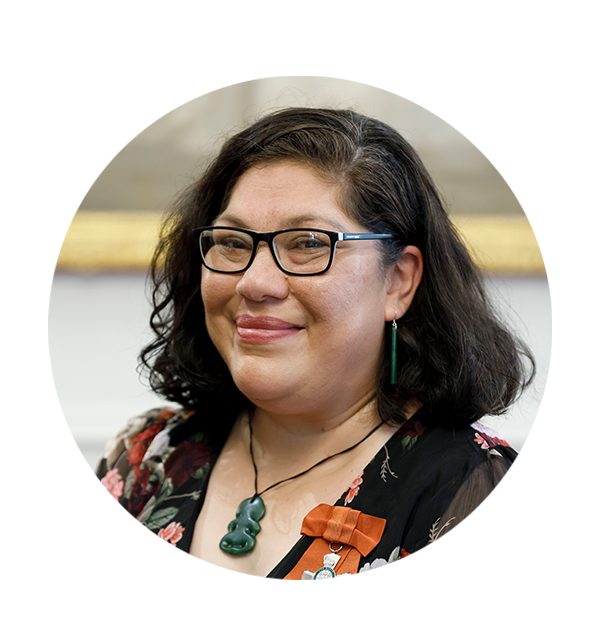 Rebekah was awarded Member of the New Zealand Order of Merit for services to education and is a Parent to Parent Board Member